

As veterinary dental and oral surgery specialists, one of the most common concerns we hear from pet parents is about the safety of anesthesia. Whether due to past experiences or stories from others, many people understandably worry about the risks. At Carefree Dentistry & Oral Surgery for Animals, we prioritize anesthesia safety for pets in every procedure and work diligently to make the experience as safe and stress-free as possible for both pets and their owners.
Advanced Anesthesia Training for Better Pet Outcomes
Our doctors receive in-depth training in veterinary anesthesia beyond what is taught in standard veterinary programs. We continue learning throughout our careers by attending seminars, lectures, and collaborating with board-certified veterinary anesthesiologists. This additional expertise allows us to safely treat pets with complex health conditions, including those who may be considered high risk.
Is My Pet Too Old for Anesthesia?
A frequent misconception is that senior pets are automatically at higher risk. While adjustments may be needed, age alone is not a contraindication for anesthesia. Healthy pets between ages 1 and 12 generally tolerate anesthesia well, and even those over 12 can be anesthetized safely with proper care. In fact, we routinely and successfully anesthetize geriatric dogs and cats.
Creating a Personalized Plan for Anesthesia Safety
To ensure anesthesia safety for pets, our process starts with a full review of your pet’s medical history. This includes their age, breed, species, any existing medical conditions, and current medications. We also speak directly with the pet’s caregiver, because no one knows your pet better than you.
After gathering this background, a thorough physical exam is performed. If any additional issues are detected, we may recommend further testing or specialist consultations, such as with a veterinary cardiologist.
A cardiologist’s recommendations may include:
-
Proceed with no changes
-
Proceed with modifications or medication precautions
-
Proceed only under direct guidance of a veterinary anesthesiologist
-
In rare cases, postpone or cancel due to excessive risk
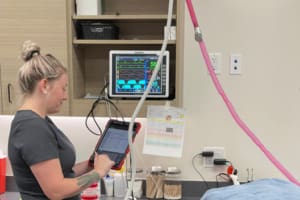
An experienced technician closely monitors a pet’s vital signs during anesthesia, ensuring accurate, real-time data is recorded throughout the procedure. Note the sheet taped to the counter. It shows the dosages and volumes of every possible emergency drug calculated for that individual patient.
What Is a Veterinary Anesthesiologist?
A veterinary anesthesiologist is a DVM who has completed a one-year internship (or equivalent) followed by a rigorous three-year residency focused on anesthesia and pain management. After passing a multi-day board exam, they earn the title of Diplomate of the American College of Veterinary Anesthesia and Analgesia (DACVAA).
At our practice, we’re fortunate to have Dr. Martin Kennedy, DACVAA, on staff. Dr. Kennedy develops personalized anesthesia plans, reviews medical records, and even remotely monitors patient vitals in real-time to support the veterinary team during high-risk procedures.
How We Manage Anesthesia from Start to Finish
The anesthesia process is carefully managed in multiple stages, with a focus on safety at every step.
Steps we follow to ensure anesthesia safety for pets:
-
A calming sedative is administered to help the pet relax.
-
An IV catheter is placed, and fluids are started based on the pet’s needs.
-
Baseline vitals like blood pressure and EKG are recorded.
-
Pre-oxygenation with 100% oxygen is given for at least five minutes.
-
An IV induction agent is used to gently bring the pet to sleep.
-
A breathing tube is placed to protect the airway.
-
Monitoring devices are applied to track temperature, heart rate, and oxygen saturation.
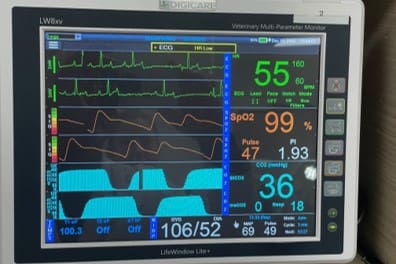
Advanced monitoring technology displays vital signs in real time to help maintain optimal conditions during anesthesia. Parameters being monitored are EKG, Oxygen Saturation, Pulse Rate, Expired CO2 , Respiratory Rate, Blood Pressure, and Body Temperature.
Throughout the procedure, at least three trained team members—an anesthesia technician, a surgical/dental technician, and the attending doctor—are present. Additional support staff may assist depending on the complexity of the case. Pain management includes the use of nerve blocks that provide relief for up to 72 hours. Many of the anesthetic agents we use also have reversal options if needed.
Temperature Management and Recovery
Pets can lose body heat quickly under anesthesia, so maintaining safe body temperature is a priority. We use heated water pads, warm air blankets (Bair Hugger), and insulation around the head to minimize heat loss. Core temperature is checked every five minutes, and adjustments are made promptly when necessary.
Recovery, or waking from anesthesia, is carefully monitored. Once the pet regains reflexes and begins to swallow, the breathing tube is removed. Vitals continue to be monitored until the pet is stable. It’s normal for pets to be slightly groggy or nauseous afterward. Anti-nausea medication is routinely administered, though some pets may still feel “off” for a day or two. Typically, younger pets recover faster, while older patients may take longer to bounce back.
Anesthesia Risk vs. Oral Health Risk
While anxiety around anesthesia is natural, delaying or avoiding dental care due to fear can be more harmful. Untreated oral disease can lead to pain, infection, and serious health problems. With our highly trained team, board-certified anesthesiologist, and advanced monitoring equipment, anesthesia safety for pets is our top priority at every stage.
If you have questions about your pet’s upcoming procedure or anesthesia safety, we’re here to help. Reach out to speak with our team—we’re always happy to walk you through the process.
Kipp J. Wingo, DVM
Diplomate, American Veterinary Dental College
Carefree Dentistry & Oral Surgery for Animals