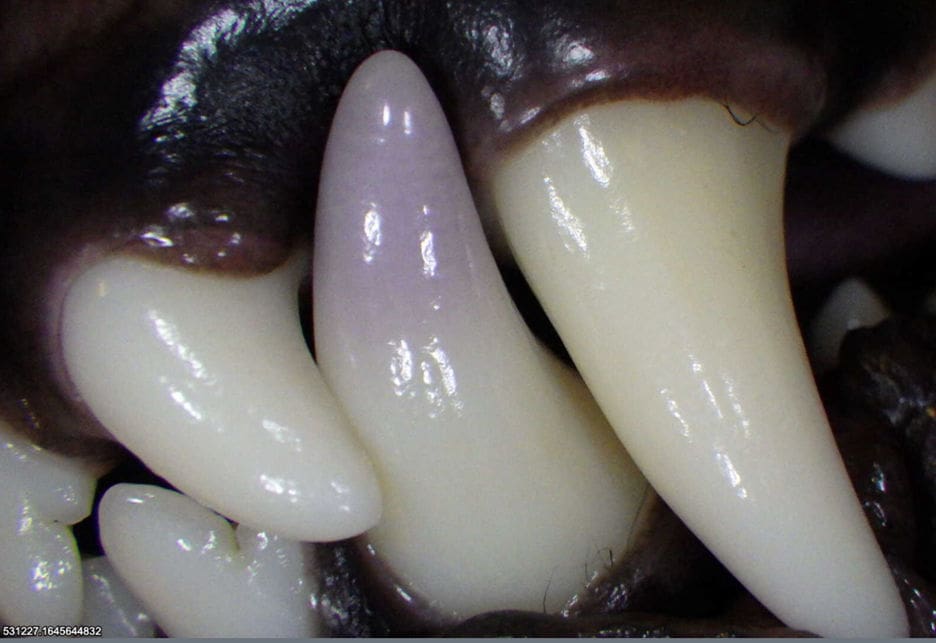
Discolored Teeth
Treating Discolored Pet Teeth in Phoenix, AZ
A discolored tooth in dogs or cats should never be ignored. While a change in tooth color may appear cosmetic, it is often a sign of underlying dental disease or injury. It has been documented that 92.2% of discolored teeth in dogs are nonvital (dead). Nonvital teeth often lead to abscesses and pain because when a tooth dies, infection can develop inside the tooth and spread to the surrounding bone.
At Carefree Dentistry & Oral Surgery for Animals, our team evaluates and treats discolored teeth using advanced diagnostic tools such as intraoral dental radiographs and cone beam CT imaging. Early diagnosis and treatment can often save the tooth, relieve pain, and prevent more serious complications.
Why Do Pet Teeth Become Discolored?
Inside every tooth is a hollow space called the pulp chamber, which contains the tooth’s blood vessels, nerves, and connective tissue. This pulp tissue keeps the tooth alive and healthy.
When a tooth experiences trauma—such as chewing on a hard object, blunt force injury, or a fractured tooth—the pulp tissue can become inflamed. Because the pulp is encased within rigid tooth structures, it cannot expand when swelling occurs.
The resulting pressure compromises blood flow to the pulp tissue. This condition is known as irreversible pulpitis, and it frequently leads to pulp death, meaning the tooth becomes nonvital.
Initially, pulp inflammation can be extremely painful. People experiencing pulpitis often describe severe toothache, and veterinary dentists believe pets experience similar discomfort. Unfortunately, animals are very good at hiding oral pain.
Once the pulp dies, pain may temporarily improve. However, infection can develop within the root canal system over time, leading to abscess formation, bone infection, and recurring oral pain.
As the pulp tissue breaks down, pigment changes occur within the dentin (the hard tissue beneath the enamel) resulting in visible tooth discoloration.
When Should a Discolored Tooth Be Evaluated?
If you notice any of the following signs, your pet should be evaluated by a veterinarian:
- Darkened or discolored tooth
- Broken or worn teeth
- Facial swelling
- Bad breath
- Dropping food while eating
- Pawing at the mouth
Many pets continue eating normally despite significant oral pain, so subtle changes should not be ignored.
Types of Tooth Discoloration in Pets
Yellow Teeth
Yellow teeth may occur due to tartar accumulation, which forms when plaque mineralizes on the tooth surface. This type of discoloration is called extrinsic staining, meaning it occurs on the outside of the tooth. However, yellow discoloration may also indicate exposed dentin when enamel has worn away or fractured.
Brown Teeth
Brown discoloration can occur from long-standing plaque and tartar buildup, but it may also indicate chronic degeneration of pulp tissue inside the tooth.
Black or Dark Gray Teeth
Teeth that appear dark gray, blue-gray, or black are often nonvital teeth caused by previous trauma. This color change usually indicates internal breakdown of pulp tissue and should be evaluated promptly. Even when pets appear comfortable, these teeth frequently develop infection over time.
Red Teeth or Red Gum Margins
A reddish tint inside the tooth may indicate recent internal bleeding within the pulp chamber, often following acute trauma.
Redness of the gums surrounding a tooth may indicate:
- Gingivitis
- Periodontal disease
- Local infection
- Tooth root abscess formation
Intrinsic vs. Extrinsic Tooth Discoloration in Pets
Intrinsic
Intrinsic staining occurs inside the tooth structure and is usually caused by:
- Tooth trauma
- Endodontic disease (pulp death)
- Internal bleeding within the pulp
- Developmental abnormalities
Intrinsic discoloration usually requires advanced dental evaluation and imaging to determine whether the tooth is still alive and whether treatment is necessary.
Extrinsic
Extrinsic staining occurs on the outside surface of the tooth and may result from:
- Plaque accumulation
- Tartar buildup
- Bacterial biofilm
- Food pigments
These stains can often be removed with professional dental cleaning and polishing.
How We Treat Discolored Teeth
The correct treatment for a discolored tooth in dogs and cats depends on the underlying cause. At our Phoenix veterinary dental specialty practice, evaluation typically includes:
- Comprehensive oral examination
- Full-mouth dental radiographs
- Advanced imaging, such as cone beam CT (CBCT), when needed
These tools allow us to determine whether the pulp is alive, whether infection is present, and whether the surrounding bone has been affected.
Depending on the diagnosis, treatment options may include:
Endodontic Disease Treatment
- If a tooth is nonvital but structurally intact, root canal therapy is often the best option. This involves removing infected pulp, disinfecting the canal, and sealing the tooth to restore function and relieve pain. A root canal helps preserve the natural tooth structure.
- Root canal therapy requires specialized equipment, advanced imaging, and extensive training in veterinary endodontics, so root canals are commonly performed by veterinarians who have undergone advanced training in dentistry and oral surgery.
- If the infection is severe and the tooth cannot be saved, treatment may require surgical extraction.
Fractured Teeth Treatment
- If discoloration is associated with a broken tooth, treatment may include root canal therapy, vital pulp therapy, or surgical extraction, depending on tooth and pulp condition.
Professional Teeth Cleanings
- If discoloration is caused by plaque, tartar, or external staining, professional dental cleaning and polishing can restore appearance and improve overall oral health.
Board-Certified Veterinary Dental Specialist in Phoenix
If your pet has a discolored tooth or possible dental injury, early evaluation can prevent pain and more serious complications.
As a board-certified veterinary dental specialty practice serving Phoenix and surrounding communities, we work closely with both pet owners and referring veterinarians to provide the highest standard of care. If you notice a discolored tooth or other dental concern in your dog or cat, contact Carefree Dentistry & Oral Surgery for Animals today to schedule an evaluation and help restore your pet’s comfort and oral health.