
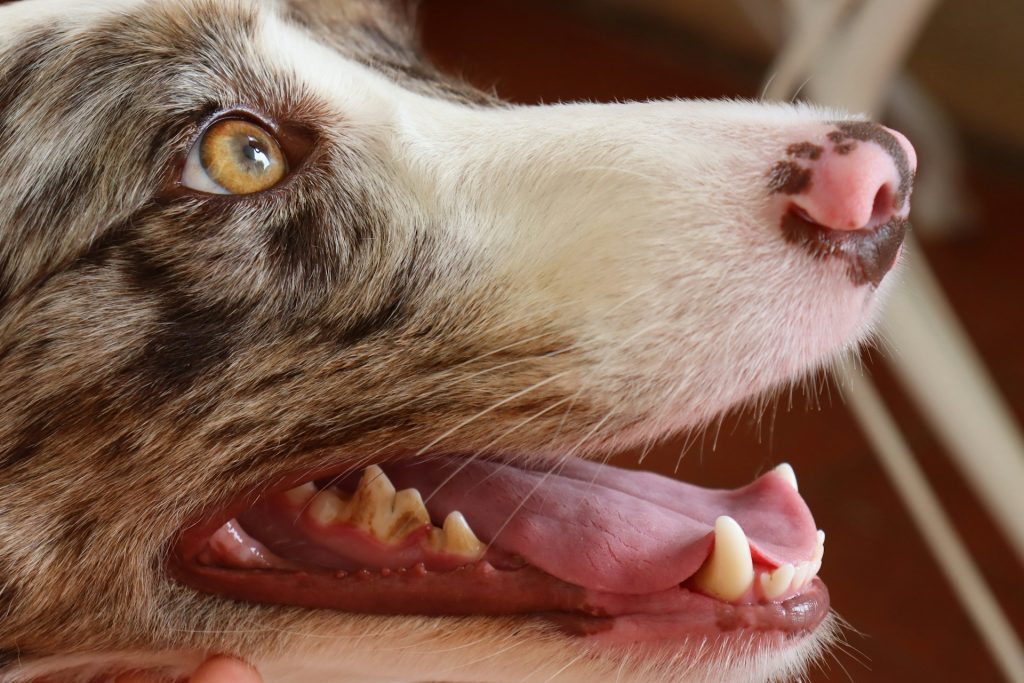
If you’ve noticed a change in your dog’s teeth, you may be wondering whether it’s harmless staining or something more serious. Understanding dog or cat tooth discoloration vs tartar is important because the two conditions have very different causes and very different implications for your pet’s health.
At Carefree Dentistry & Oral Surgery for Animals and Raintree Dentistry & Oral Surgery for Animals, our team of board-certified veterinary dentists and oral surgeons evaluates these conditions daily. Knowing the difference can help you decide when to seek expert care.
What Is Tartar?
Tartar, also called calculus, forms when plaque, a film of bacteria, hardens or mineralizes on the surface of the tooth. It typically appears as:
- Yellow, tan, or brown buildup
- A rough, crusty layer on the outside of teeth
- Most commonly along the gumline
Tartar is a surface problem, but it leads to deeper issues. Over time, it contributes to periodontal disease, which can cause gum inflammation, infection, bone loss, and tooth loss. Periodontal disease is a disease of the supporting structures of the tooth and often leads to tooth loss.
It is important to understand that periodontal disease is driven primarily by plaque and tartar below the gumline, the hidden portion that cannot be seen during a routine visual exam. The tartar visible on the surface of the teeth is only part of the problem.
The only effective way to thoroughly clean beneath the gumline and treat periodontal disease in a dog or cat is under general anesthesia. This allows for proper scaling, probing, and dental radiographs. At Carefree Dentistry & Oral Surgery for Animals and Raintree Dentistry & Oral Surgery for Animals, a board-certified veterinarian is involved with every patient we care for.
For this reason, non-anesthetic dental cleanings are limited in their ability to address true dental disease and do not meet the standard of care for comprehensive oral health treatment.
A board-certified veterinary dentist can remove tartar safely through a professional dental cleaning performed under anesthesia. This allows for complete treatment both above and below the gumline.
What Is Tooth Discoloration?
Tooth discoloration is different. It often originates from within the tooth.
Common signs of tooth discoloration include:
- Gray, purple, pink, or darkened teeth
- A single tooth that looks different from the others
- Color changes following trauma or chewing on hard objects
In cases of dog tooth discoloration vs tartar, discoloration is often a sign that the tooth’s pulp, the living tissue inside the tooth, has been damaged or has died.
This is not just cosmetic. It may indicate:
- Internal bleeding within the tooth
- Pulp necrosis, or death of the tooth
- Infection inside the root
A board-certified veterinary dentist and oral surgeon uses dental radiographs and advanced diagnostics, such as cone beam computed tomography, to determine whether a tooth can be saved with root canal therapy or must be extracted.
Key Differences: Discoloration vs. Tartar
Understanding dog tooth discoloration vs tartar comes down to a few key distinctions:
Location:
Tartar sits on the surface. Discoloration comes from within the tooth.
Appearance:
Tartar is rough and layered.
Discoloration is smooth but changes the tooth’s color.
Number of teeth affected:
Tartar usually affects multiple teeth. Discoloration often affects just one.
Severity:
Tartar leads to gum disease. Discoloration may indicate a dead or infected tooth.
Both conditions require attention, but discoloration is often more urgent.
When Should You Be Concerned?
If you notice any of the following, it’s time to seek evaluation by a board-certified veterinary dentist and oral surgeon:
- A darkened or discolored tooth
- Visible tartar buildup with red or bleeding gums
- Bad breath
- Difficulty chewing
- Pawing at the mouth
Many pets hide dental pain, so even subtle changes can signal significant disease.
Why Specialist Evaluation Matters
Distinguishing between dog tooth discoloration and tartar is not always straightforward without proper training and diagnostic tools.
At Carefree Dentistry & Oral Surgery for Animals and Raintree Dentistry & Oral Surgery for Animals, our team of board-certified veterinary dentists and oral surgeons uses advanced imaging and comprehensive examinations to accurately diagnose dental conditions and recommend the best treatment.
Whether your pet needs a professional cleaning, root canal therapy, or surgical care, early intervention leads to better outcomes.
The Bottom Line
Tartar and tooth discoloration may look similar at a glance, but they represent very different problems. Tartar is a surface buildup that can be cleaned, while discoloration often signals more serious damage inside the tooth.
If you are unsure which condition your pet has, the safest step is to consult a board-certified veterinary dentist.
For pet owners searching for expert care, quality service, and safe anesthesia, Carefree Dentistry & Oral Surgery for Animals and Raintree Dentistry & Oral Surgery for Animals provide specialty-level dental services designed to protect your pet’s comfort, health, and long-term quality of life.
Photo by CC PD on Unsplash used with permission under the Creative Commons license for commercial use 04/30/2026
