
Dental disease in cats is often underdiagnosed, maybe because they are harder to be put in front of a veterinarian! Diseases affecting teeth and gums are believed to be found in older animals. Although this is true for some conditions like tooth resorption or advanced periodontal disease, young cats can also develop teeth and gum disease.
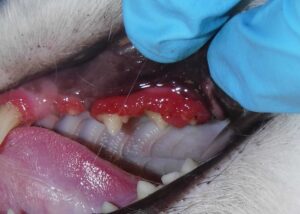
A young cat with bright red, inflamed gums can be surprising. We tend to associate significant dental disease with older pets, yet some cats develop severe gingival inflammation shortly after their permanent teeth erupt. Historically, this condition has often been called “juvenile gingivitis” or “juvenile hyperplastic gingivitis.” However, our understanding of this disease has evolved.
Today, the terms early-onset gingivitis (EOG) and aggressive periodontitis (AP) more accurately describe the spectrum of disease that can occur in these young cats. This distinction is important because what initially appears to be “just gingivitis” may already be associated with significant periodontal destruction below the gumline. A 2023 study by Soltero-Rivera and colleagues helped better characterize these conditions and demonstrated why early diagnosis, dental radiographs, treatment and long-term monitoring are so important.
There are two distinct periods during which significant oral inflammation can occur in juvenile cats. One of these periods is around the time of kitten vaccinations, where occasional oral inflammation can be observed. It is uncertain whether this inflammation is an immune response to the vaccine components or a result of the eruption of deciduous teeth, leading to increased levels of dental plaque. Generally, this inflammation is temporary and tends to improve with better oral hygiene practices. In cases where there is overgrowth of the gums (a.k.a. gingival enlargement), a gingivectomy may be necessary to resolve the issue (surgical removal of excessive gum tissue).
The second period associated with increased levels of oral inflammation is when the permanent teeth start to emerge. This is a common time for significant gingival inflammation to occur, even in healthy cats. Cats with lesions extending beyond the muco gingival junction require intensified oral hygiene measures to both alleviate the inflammation and prevent long-term tissue changes such as gingival recession or gingival hyperplasia.
We can therefore classify feline juvenile gingivitis in two distinct presentations.
What Is Early-Onset Gingivitis in Cats?
Early-onset gingivitis describes significant inflammation of the gingiva associated with
the permanent teeth of young cats, often beginning around 6–8 months of age. The
gums may appear intensely red, swollen and prone to bleeding. The cause of this condition is still unknown, and its frequency hasn’t been documented. However, it tends to become less common after approximately two years of age. Cats affected by this condition experience significant gum inflammation, characterized by redness, swelling, and easy bleeding during chewing or oral examination. Some affected cats also develop gingival enlargement, which explains why the condition was historically called “juvenile hyperplastic gingivitis. However, gingival enlargement is not present in every affected cat. In the Soltero-Rivera study, only about half of the cats had gingival enlargement, making the older terminology potentially misleading.
Most importantly, gingivitis and periodontitis are not the same thing.
Gingivitis is inflammation confined to the gingiva. At this stage, the disease is considered reversible if the underlying cause is appropriately controlled.
Periodontitis occurs when inflammation progresses deeper and damages the structures that support the tooth, including the periodontal ligament and alveolar bone. Once this attachment and bone loss occurs, the damage is no longer completely
reversible.
For some young cats, progression can occur surprisingly early and rapidly.
Interestingly, affected cats don’t show signs of pain, and the back part of their mouth (caudal oral mucosa) remains unaffected. Although any cat breed can be affected, there is a genetic predisposition in Siamese, Somali, Maine Coon, Persian, and Abyssinian cats. Treatment typically involves early dental cleaning, consistent daily oral care, and gingivectomy to remove the pockets and reduce inflammation. Some patients may require frequent dental cleanings every three to six months. With appropriate treatment, the symptoms can improve. However, if left untreated, the condition usually progresses rapidly, leading to tooth loss and possibly chronic stomatitis.


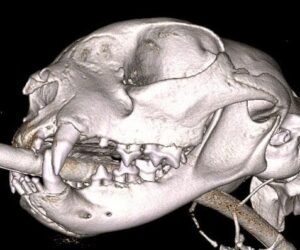

What Is Aggressive Periodontitis?
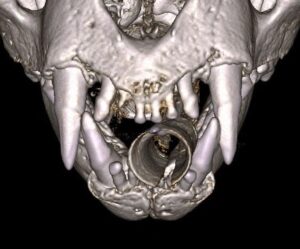
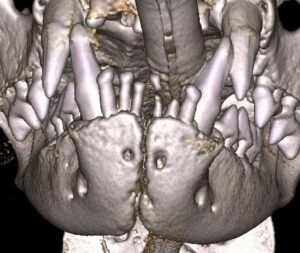
Aggressive periodontitis describes a destructive form of periodontal disease occurring at
an unusually young age and progressing much faster than we would expect from typical
periodontal disease. This condition is observed in cats under nine months of age, primarily in Siamese, Maine Coon, and Domestic Shorthaired cats.
Affected cats can develop periodontal pockets, gingival recession, loss of supporting
bone, exposed tooth roots and eventually tooth loss—sometimes while they are still
very young. The worst affected areas are the mandibular first molar teeth and mandibular incisor teeth, which often become loose. Halitosis (bad breath) is commonly present during tooth eruption.
This is one reason we should not dismiss substantial gingivitis in a kitten or young adult
cat as something the cat will simply “grow out of.”
The exact cause of early-onset gingivitis and aggressive periodontitis remains uncertain. Genetics, individual immune response, oral bacteria and environmental influences may all play a role.
Treating and managing this condition is challenging, and extraction of severely affected teeth is often necessary. Managing the disease requires early dental cleanings starting around nine months of age, followed by regular cleanings every six to nine months. Diligent home oral care is essential to control plaque. Radiographic assessment is valuable for assessing bone loss and diagnosing early tooth resorption, which frequently occurs at sites of periodontal inflammation.
Further research is needed to determine if these cats will eventually exhibit signs of Feline Chronic Gingivostomatitis (FCGS).
The Mouth Can Look Much Better Than It Really Is
One of the most important findings from the 2023 study involved the difference between
what could be identified during an awake examination and what was discovered after a
complete anesthetized dental evaluation.
The study included 27 cats with early-onset gingivitis or periodontitis. During the initial
awake examination, evidence of periodontal disease was recognized in only 30% of the
cats.
Dental radiographs told a dramatically different story.
Radiographic evidence of periodontal disease was found in 89% of the cats, and
moderate-to-severe periodontal disease was confirmed radiographically in 78% of cats
with moderate-to-severe early-onset gingivitis.
That difference illustrates an important principle of veterinary dentistry: we cannot
determine the health of a tooth simply by looking at the visible crown and gums.
Much of the tooth and its supporting structures are hidden beneath the gumline.
Periodontal probing and full-mouth dental radiographs performed under anesthesia are
necessary to determine whether supporting bone has already been lost.
This is particularly important in young cats with unexpectedly severe gingivitis.
What Signs Might Owners Notice?
Some cats with early-onset gingivitis or aggressive periodontitis show obvious signs of
oral discomfort, while others appear completely normal.
In the Soltero-Rivera study, inflammation was present in all cats, but some cats had no
clinical signs noticed at home. Halitosis and oral discomfort were among the more
common symptoms, and some cats had already experienced tooth loss by the time they
were evaluated.
Owners may notice:
- Bright red or swollen gums
- Bleeding along the gumline
- Bad breath
- Difficulty eating or changes in chewing
- Drooling
- Reluctance to have the mouth touched
- Missing or loose teeth
- Reduced appetite or weight loss
However, the absence of these signs does not mean the mouth is healthy. Cats are
remarkably good at concealing oral pain.
Why Early Evaluation Is So Important
One of the major conclusions from the study was that cats should receive an oral
evaluation as early as 6 months of age. Cats with substantial gingivitis should undergo
a comprehensive anesthetized oral examination, periodontal treatment and appropriate
diagnostic imaging. This is especially important because early-onset gingivitis is not necessarily a static condition.
Some cats may remain relatively stable with appropriate care, while others can progress
to aggressive periodontitis. In the study, seven cats experienced worsening aggressive
periodontitis during follow-up. Two cats developed lesions resembling feline chronic
gingivostomatitis (FCGS), suggesting there may be an association between these
inflammatory conditions, although more research is needed before we fully understand
that relationship.
Another particularly useful finding involved follow-up examinations. Cats whose
gingivitis or clinical signs failed to improve at their first recheck were significantly more
likely to experience disease progression.
In other words, these cats need long-term monitoring, not simply a one-time dental
cleaning.
How Is Early-Onset Gingivitis Treated?
Treatment depends on how advanced the disease is when it is diagnosed.
The first step is a complete oral examination under general anesthesia, including
periodontal probing and full-mouth dental radiographs. This allows each tooth to be
evaluated individually and reveals periodontal bone loss that cannot be detected during
an awake examination.
Professional periodontal therapy removes plaque and calculus above and below the
gumline. Depending on the findings, treatment may also include more advanced
periodontal procedures.
Unfortunately, when periodontal destruction is already severe, some teeth may not be
salvageable. Extraction of teeth with advanced attachment and bone loss may be
necessary to eliminate infection and discomfort.
The study’s authors specifically recommend that owners of affected cats be prepared
for the possibility of extractions because moderate-to-severe periodontitis was so
frequently identified.
Home care is also extremely important. When tolerated, daily tooth brushing can help
control plaque. Veterinary dental diets and products accepted by the Veterinary Oral
Health Council may also be useful components of an individualized home-care program.
Don’t Dismiss Red Gums in a Young Cat
Perhaps the most important message for cat owners is simple: significant gingivitis in
a young cat is not normal and should not be ignored.
The historical term “juvenile gingivitis” can make the condition sound temporary or
relatively harmless. We now understand that early-onset gingivitis represents a
spectrum of disease. In some cats, inflammation may progress rapidly to aggressive
periodontitis with significant loss of the tissues and bone supporting the teeth. Early recognition gives us the best opportunity to intervene before extensive periodontal
destruction and tooth loss occur.
If your kitten or young cat has unusually red, swollen or bleeding gums, an evaluation
by your veterinarian or a veterinary dental specialist is warranted. A thorough
anesthetized examination and full-mouth dental radiographs can reveal disease that
simply cannot be identified by looking inside an awake cat’s mouth.
Cat Dentist in Phoenix
At Carefree Dentistry & Oral Surgery for Animals, our goal is not simply to treat
dental disease after it becomes severe. Whenever possible, we want to recognize
problems early, preserve healthy teeth and prevent chronic oral pain.
When it comes to early-onset gingivitis and aggressive periodontitis, young age should
never be mistaken for a guarantee of a healthy mouth.
For more information or to schedule an appointment, contact our team at Carefree Dentistry and Oral Surgery for Animals.
Explore further insights into Feline Juvenile Gingivitis. Dr. Melissa Guillory, a resident at Animal Dental Care & Oral Surgery in Colorado, has shared a blog detailing “The Causes of Juvenile Onset Periodontal Disease in Cats” and “Identifying Signs and Symptoms of Gum Disease in Cats.”
Reference
Soltero-Rivera M, Vapniarsky N, Rivas IL, Arzi B. Clinical, radiographic and
histopathologic features of early-onset gingivitis and periodontitis in cats (1997–2022). J
Feline Med Surg. 2023;25(1):1098612X221148577. doi:10.1177/1098612X221148577.
PMID: 36651926; PMCID: PMC10812046.
